
How It Works · bowrex · Integrated Docking Thrust System
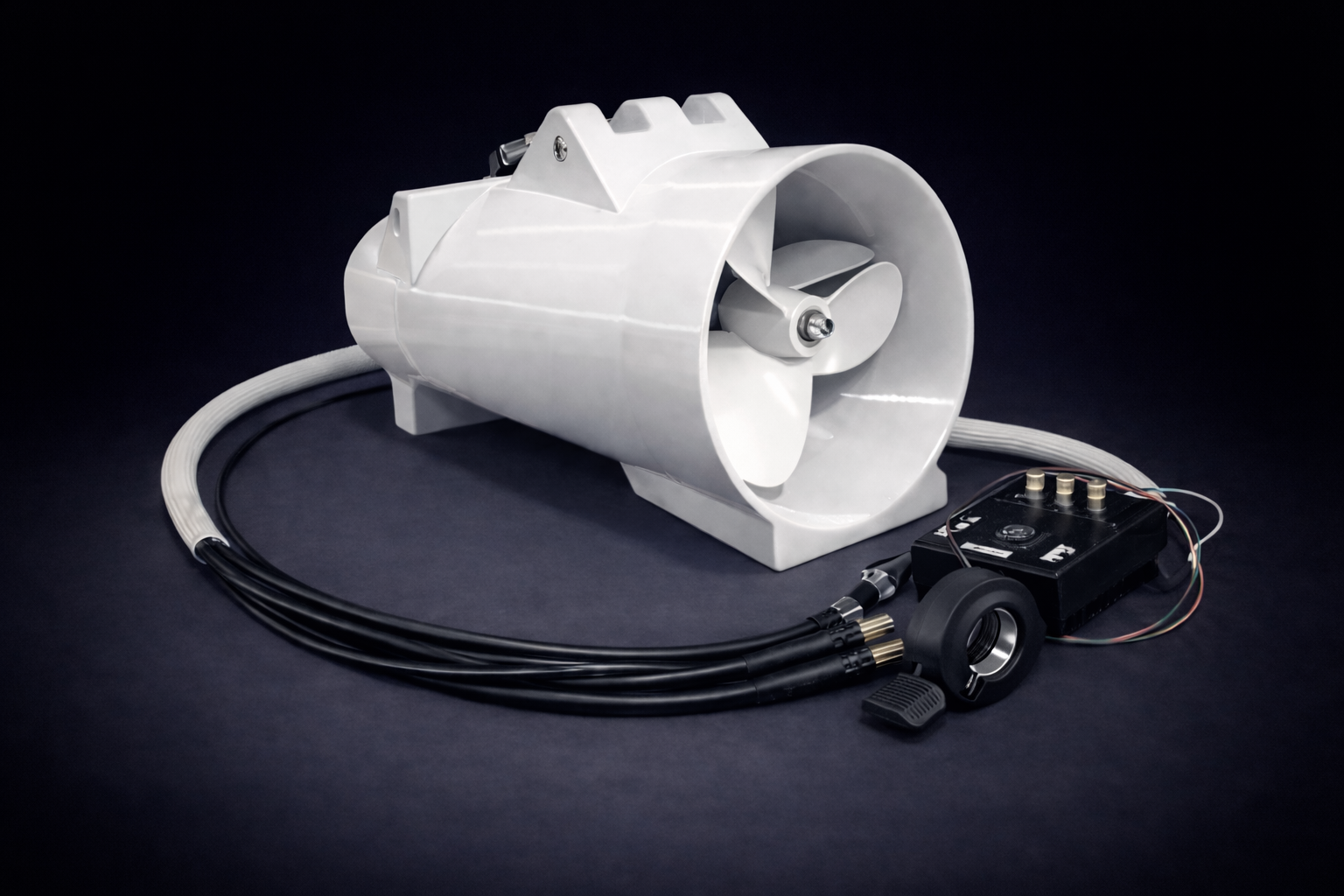
How bowrex applies controlled bow thrust during docking
bowrex is a permanently wired, fully integrated docking thrust system
engineered for controlled short-duration thrust application at the bow.
The motor drive, ESC, wiring architecture, and control interface operate as a unified assembly.
Use follows a direct sequence:
lift from the case, position over the rail, lower into the water, switch on, and apply controlled burst thrust.
The system remains electrically integrated as delivered and is operated through a direct wired thumb throttle
connected to the ESC.
Engineering intent: bowrex is engineered for controlled burst thrust during low-speed docking and close-quarters positioning, with electrical and thermal loading matched to that defined duty cycle.
1) Integrated drive system: sealed BLDC thrust matched to docking duty
bowrex is built around a sealed underwater BLDC drive integrated with its ESC and fixed wiring architecture. The assembly is engineered for repeatable short-duration thrust output during docking—where control and response matter more than sustained runtime.
- Sealed marine BLDC drive: engineered for submerged thrust operation
- Integrated power electronics: ESC behavior and control response defined by design
- Docking duty cycle: controlled burst thrust for practical bow positioning
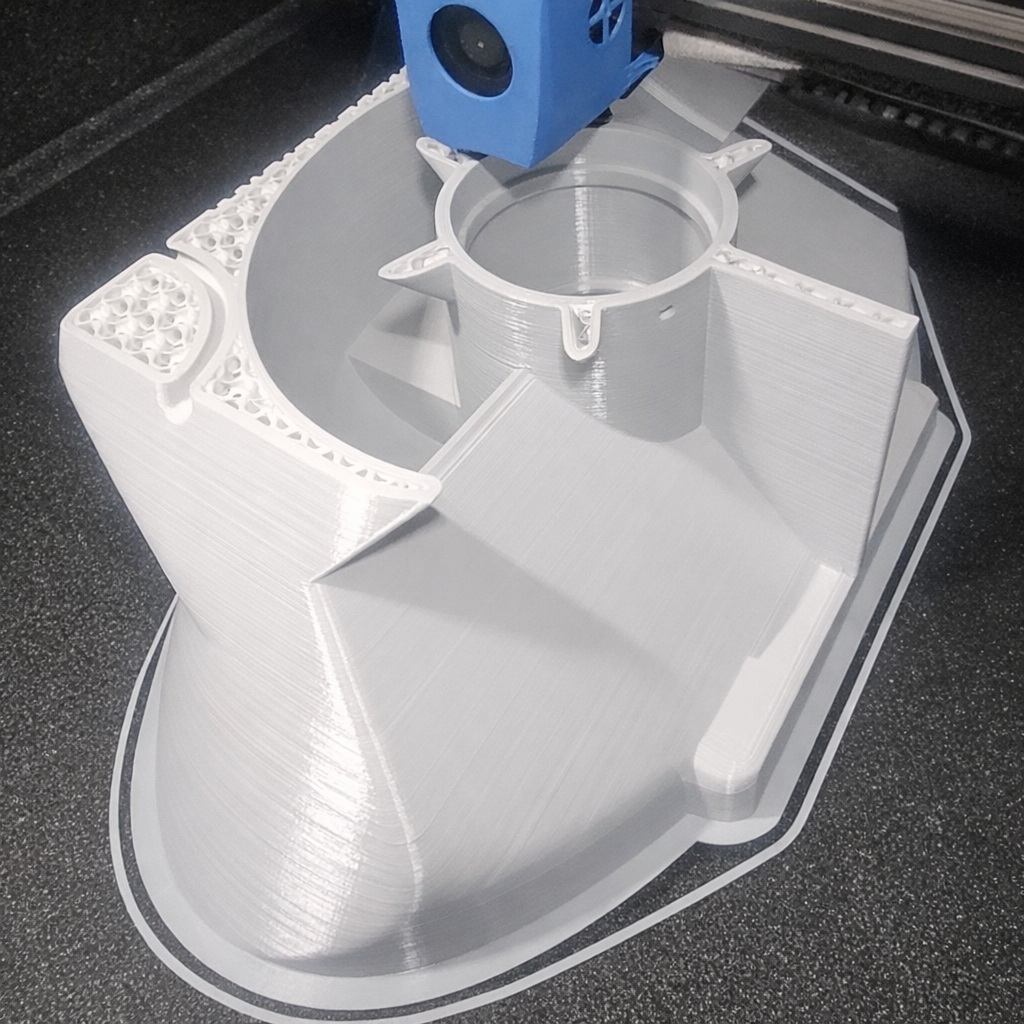
Fit and handling guidance is provided in documentation supplied with the system.
2) Bow control physics: leverage and inertia under burst thrust
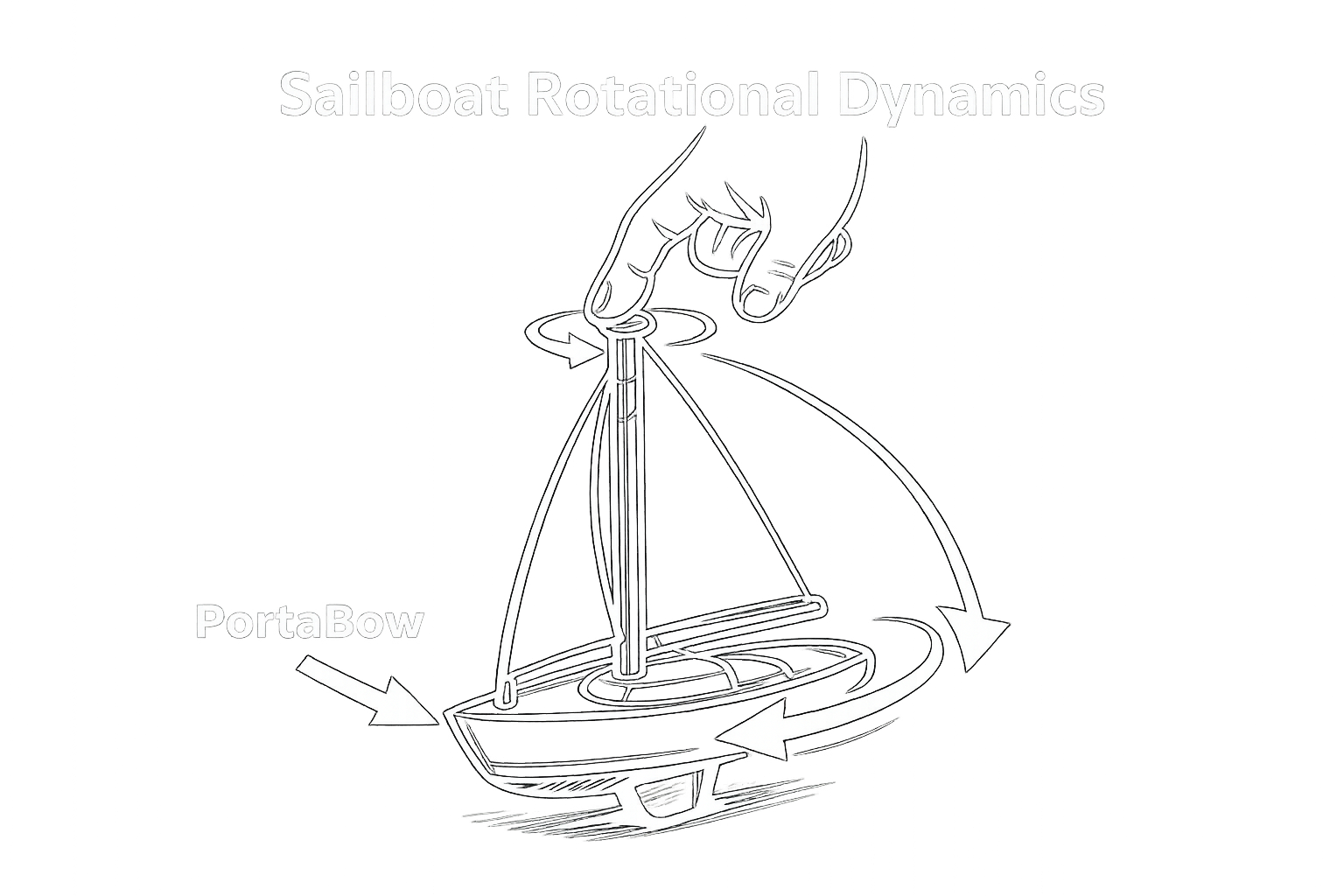
Docking control is governed by thrust applied at a moment arm. bowrex applies thrust at the bow, converting short-duration thrust into rotational response where leverage is highest. Vessel inertia then carries the motion between pulses, enabling controlled alignment without continuous operation.
- Forward moment arm: bow placement increases turning effect per unit thrust
- Inertial carry: rotation continues between short activations
- Controlled input: brief pulses for correction and alignment
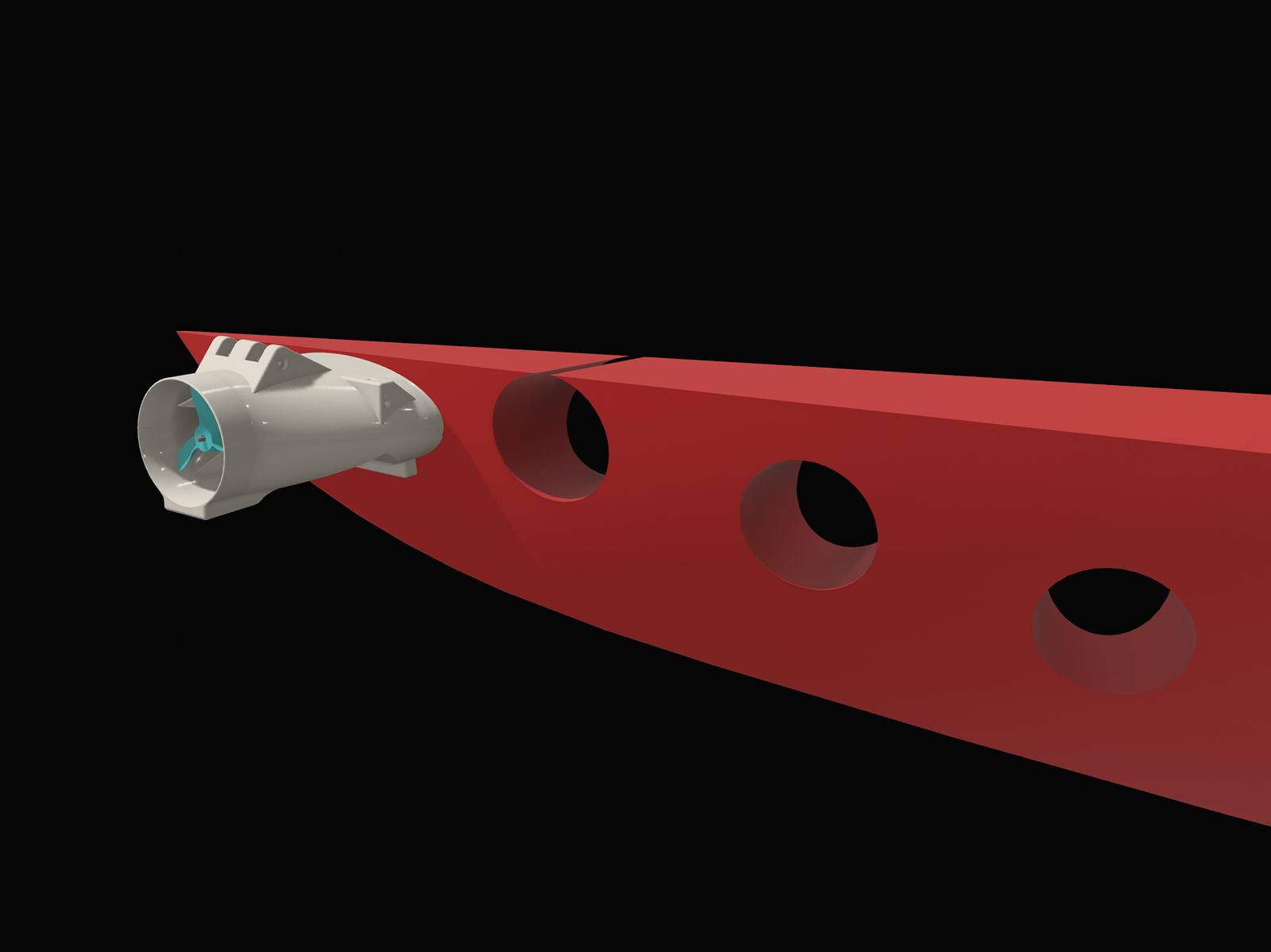
bowrex is engineered for short-duration docking thrust. Electrical and thermal loading are matched to a defined burst duty cycle, with control delivered through a direct wired thumb throttle connected to the ESC.
3) Load stability: controlled thrust requires controlled positioning
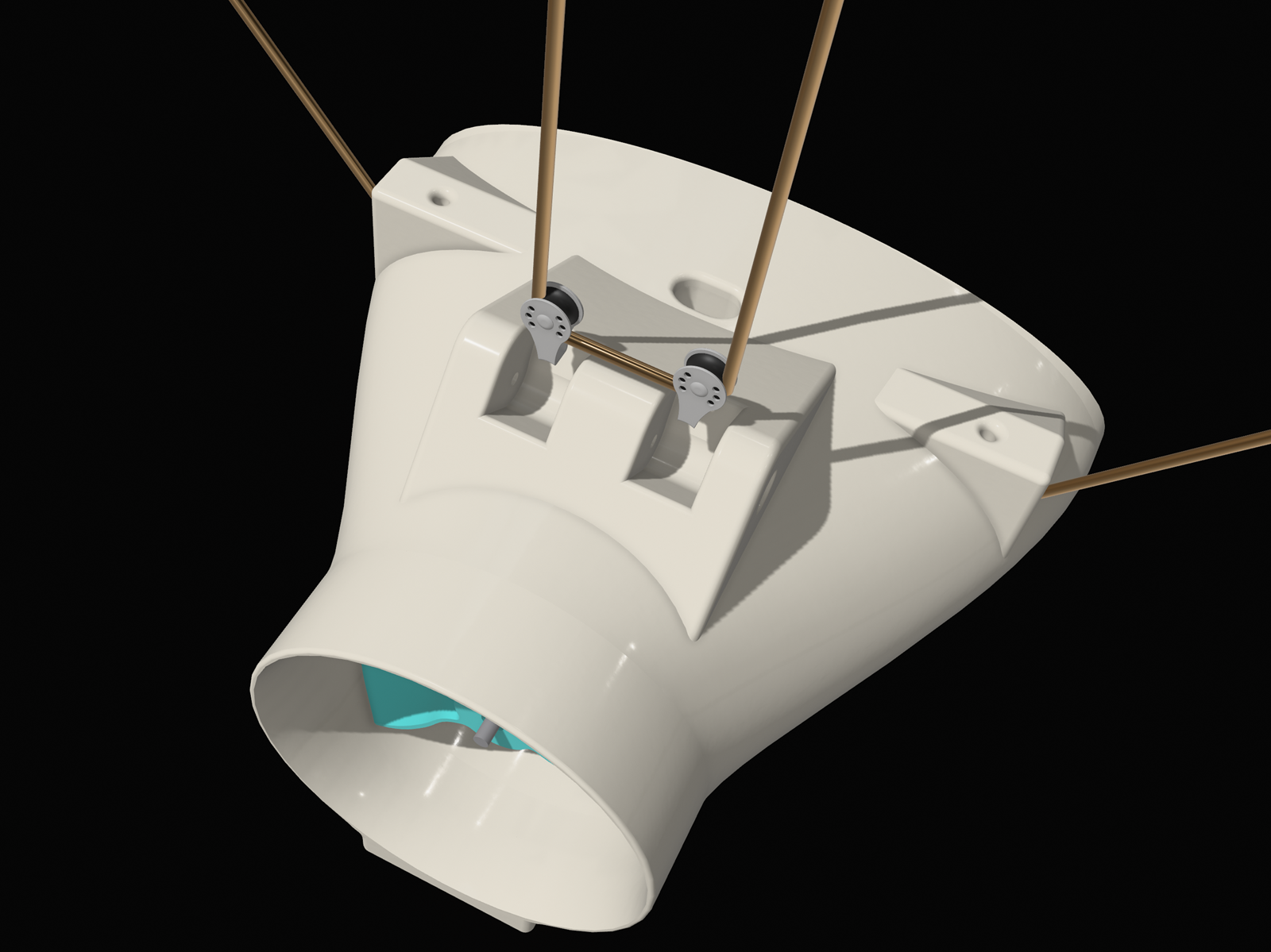
Predictable docking thrust depends on maintaining alignment under load. bowrex uses a suction stabilization interface and a three-point line control method to keep the thrust vector stable during short-duration activations, supporting consistent response at the bow.
- Suction stabilization: maintains contact and alignment under thrust load
- Three-point line control: control line with two stays for positional stability
- Consistent response: stable thrust direction for repeatable bow corrections
4) Docking duty cycle: engineered peak thrust in controlled bursts
Docking corrections are brief, deliberate inputs. bowrex is engineered to deliver high peak thrust in short-duration activations, with electrical, thermal, and mechanical loads matched to that defined operating profile.
- High peak thrust for immediate bow correction
- Defined duty cycle aligned with docking use
- Unified assembly operated as one integrated system
Operating mode: controlled burst thrust applied through a direct wired throttle for precise docking corrections.
Footage and technical answers are provided in documentation supplied with the system.
Advanced detail: Air ingestion control under burst thrust
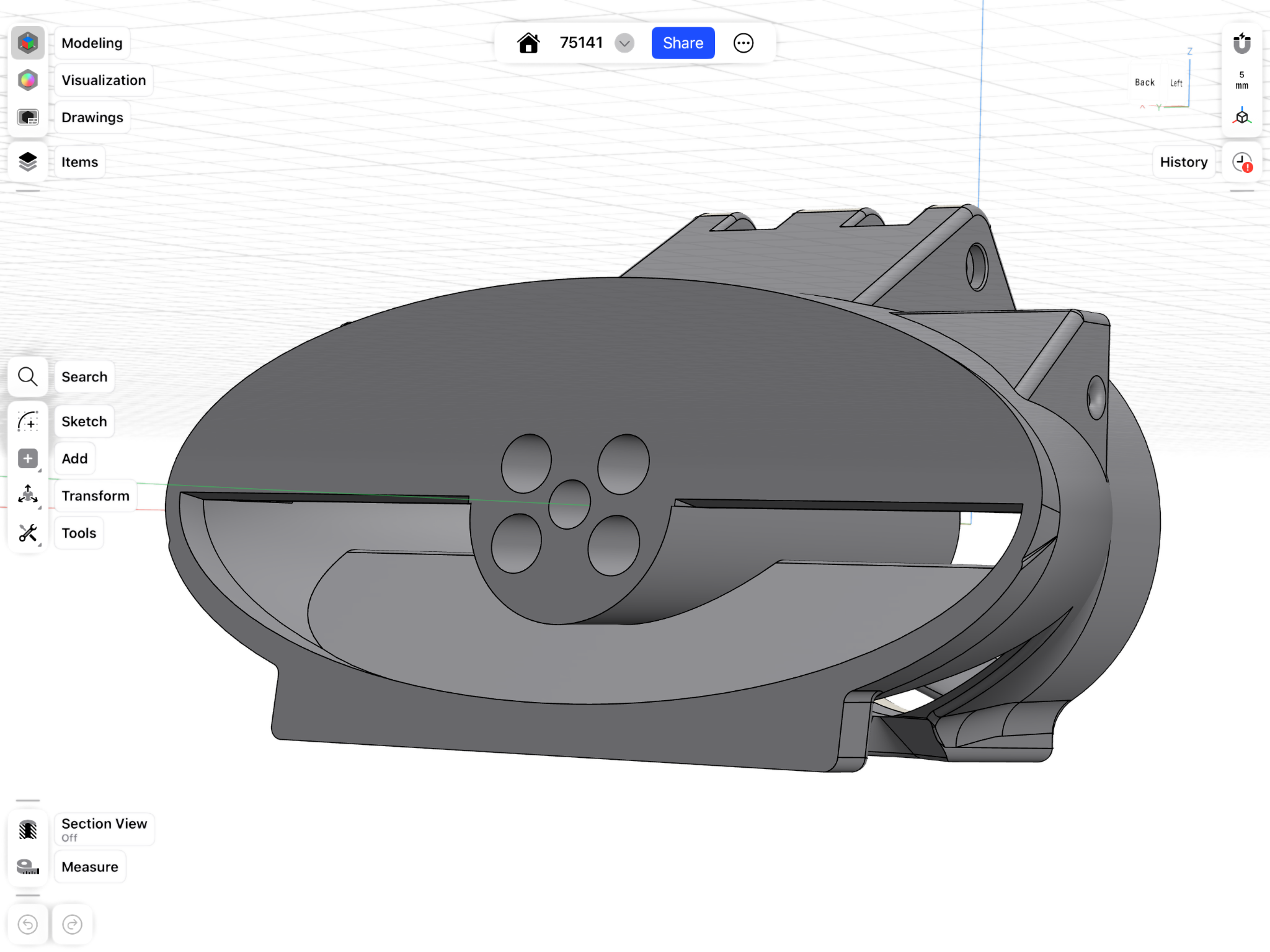
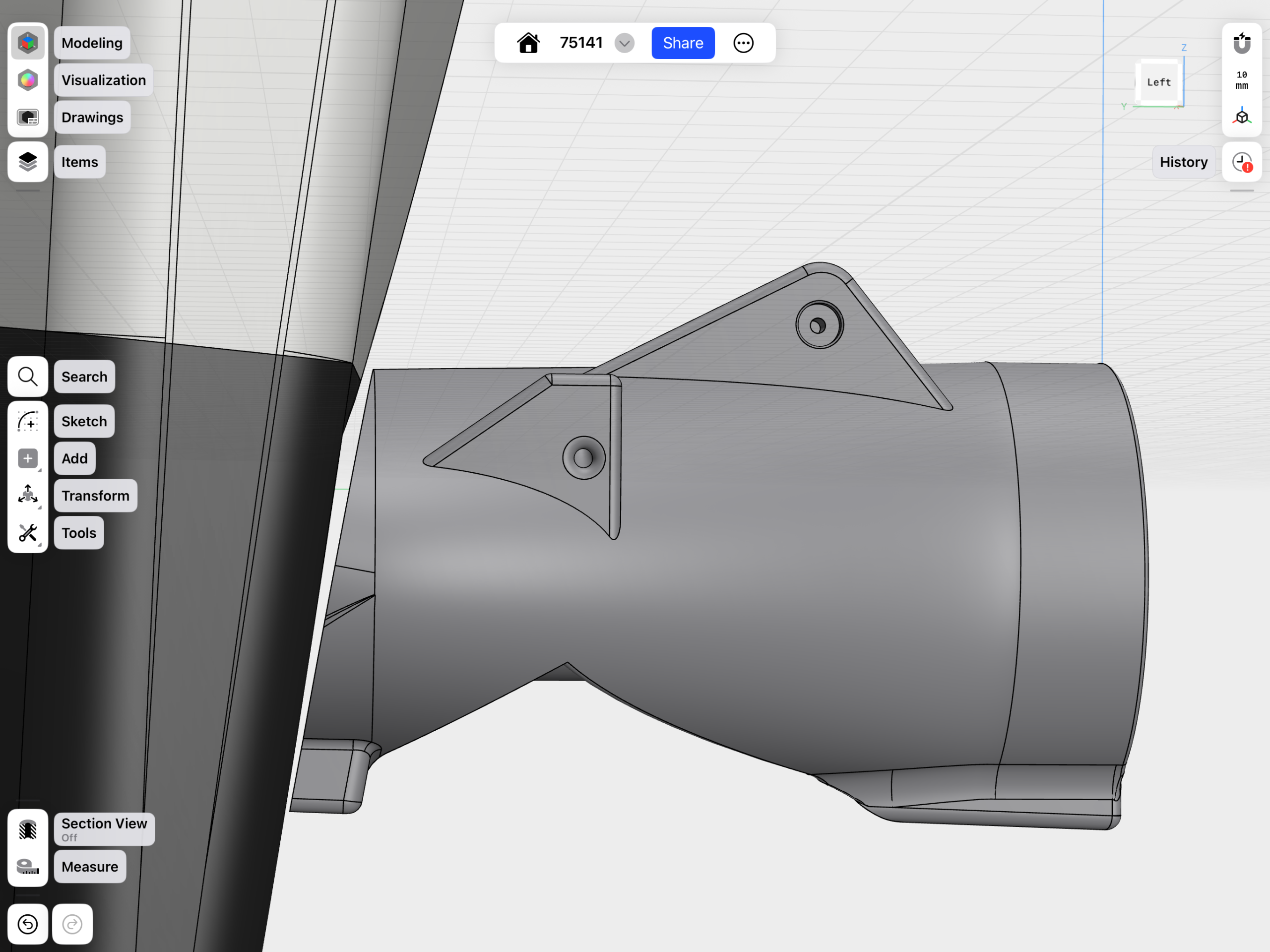
bowrex is engineered to maintain thrust consistency near the surface during docking. The upper portion of the housing is sealed, constraining the intake path to the lower forward opening with bottom-fed inflow. This reduces surface-air influence during short-duration thrust application.
Why surface-adjacent intakes ingest air
- Near-surface intake paths can draw air during waves, roll, and rapid attitude changes.
- Air ingestion reduces effective thrust and introduces response variability.
- Consistent docking thrust requires intake control near the hull contact region.
Controlled intake path by sealed upper housing
- Sealed upper housing: limits air entry paths from above.
- Lower forward opening + bottom feed: supplies water from the bow contact region.
- This supports stable thrust response during controlled burst operation at the forward position.
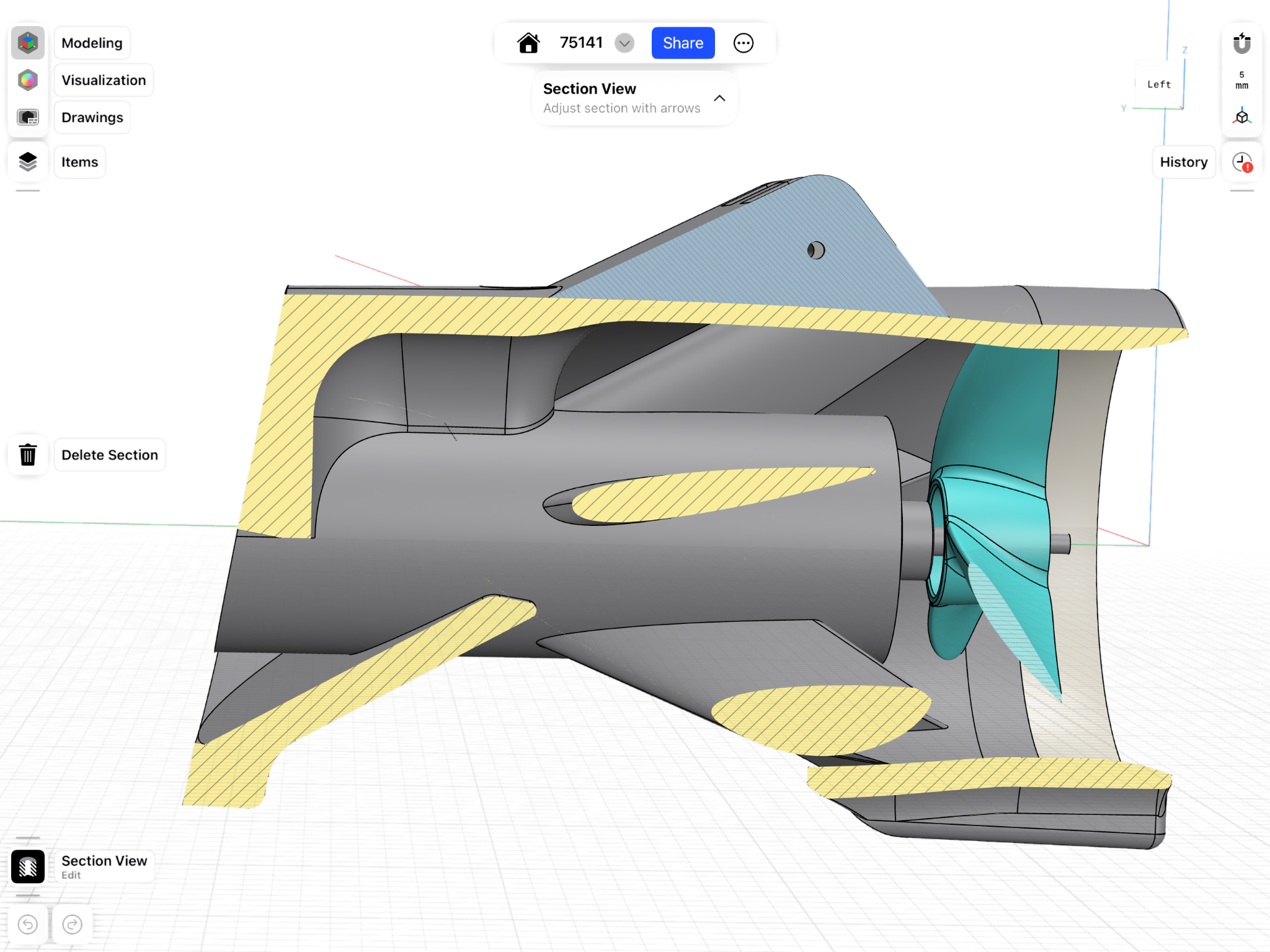
Key result: A sealed upper housing with a bottom-fed intake path supports consistent thrust response near the surface during controlled burst docking operation.